

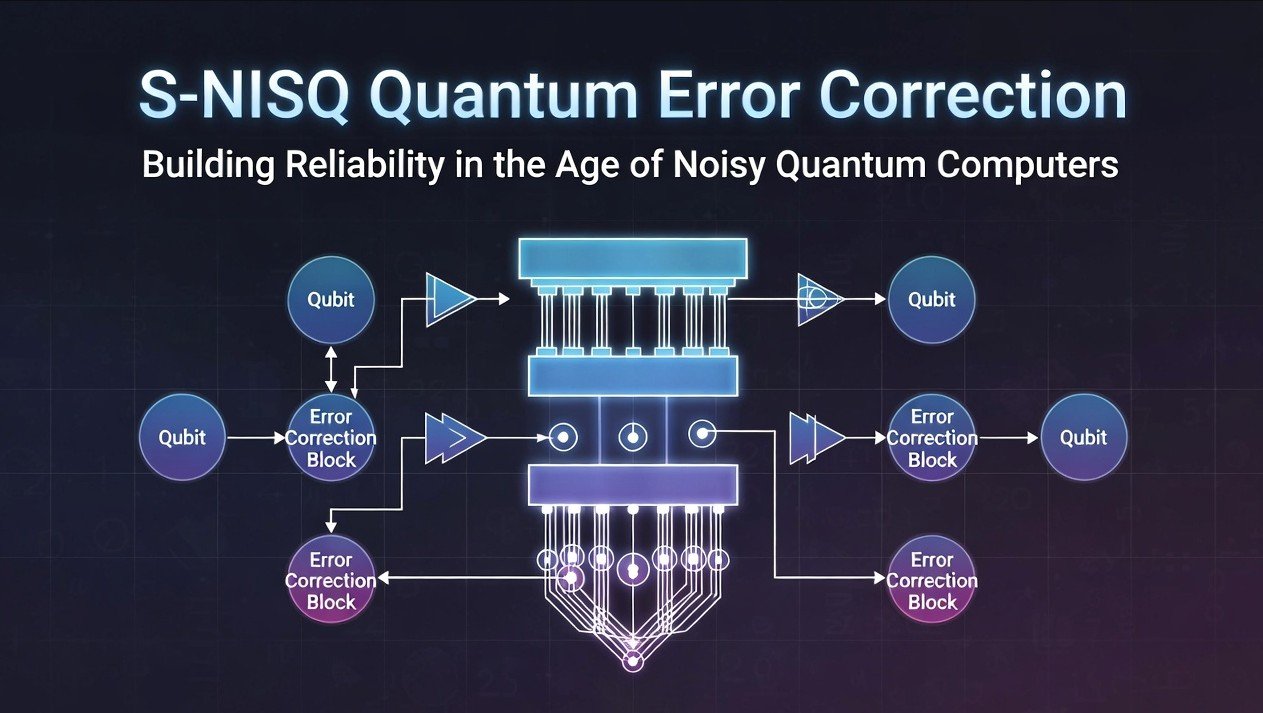
Introduction to S-NISQ Quantum Error Correction
Quantum computing has emerged as one of the most promising technological developments of the 21st century. Researchers, technology companies, and academic institutions are investing heavily in quantum systems capable of solving problems that are difficult or impossible for classical computers. However, one major challenge continues to limit progress: quantum errors.
This challenge has led to increasing interest in s-nisq quantum error correction, a concept associated with improving the reliability and performance of quantum computers operating in the Noisy Intermediate-Scale Quantum (NISQ) era. As quantum devices become more advanced, error correction techniques are becoming essential for achieving practical and scalable quantum computing.
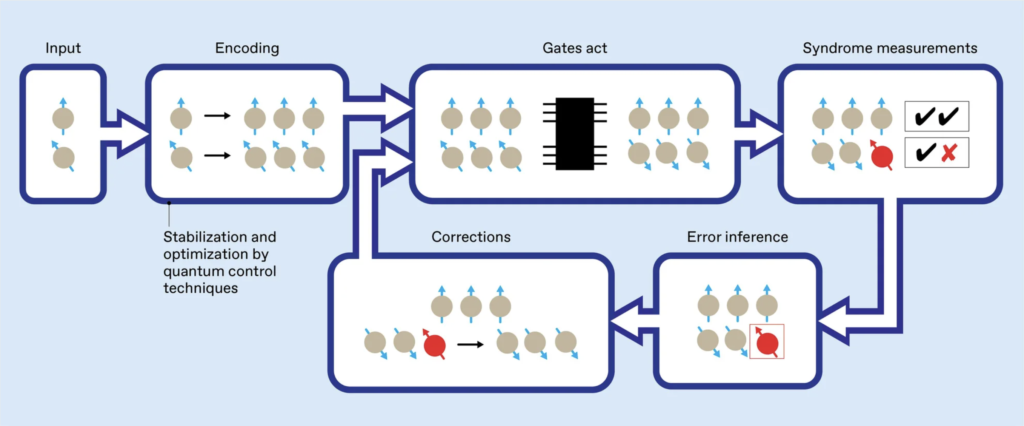
This article explores the foundations, importance, applications, challenges, and future potential of s-nisq quantum error correction while providing a detailed understanding of its role in modern quantum technologies.
What Is S-NISQ Quantum Error Correction?
To understand s-nisq quantum error correction, it is important to first understand the NISQ era.
NISQ stands for:
- Noisy
- Intermediate-Scale
- Quantum
NISQ devices contain dozens or hundreds of qubits but remain susceptible to various forms of noise and operational errors.
Unlike classical computers, quantum computers are extremely sensitive to environmental disturbances. Even small interactions with surrounding systems can disrupt calculations and introduce inaccuracies.
S-NISQ quantum error correction focuses on reducing these errors while maximizing the usefulness of existing quantum hardware.
Why S-NISQ Quantum Error Correction Matters
Quantum systems are fundamentally different from traditional computing systems.
S-NISQ Quantum Error Correction and Reliability
Reliability is critical for quantum computing success.
Without effective error correction:
- Calculations become inaccurate
- Quantum states degrade quickly
- Computational results become unreliable
- Large-scale applications remain impractical
Error correction helps preserve information throughout computational processes.
S-NISQ Quantum Error Correction and Scalability
Scalability remains one of the biggest goals in quantum computing research.
As systems grow larger:
- Error rates increase
- Complexity expands
- Stability becomes harder to maintain
Advanced correction methods support the development of larger and more capable quantum architectures.
Understanding Quantum Errors
Before exploring correction techniques, it is important to understand the types of errors quantum systems encounter.
Bit-Flip Errors
Bit-flip errors occur when a quantum state changes unexpectedly.
For example:
- A qubit representing one state may flip into another state unintentionally.
Phase-Flip Errors
Phase-flip errors affect the phase relationship within quantum states.
These errors can significantly impact computational accuracy.
Decoherence
Decoherence occurs when qubits lose their quantum properties due to environmental interactions.
This remains one of the most significant obstacles in quantum computing.
Operational Errors
Hardware imperfections can introduce errors during quantum gate operations and measurements.
Core Principles of S-NISQ Quantum Error Correction
Several principles form the foundation of modern error correction systems.
Redundancy Without Duplication
Classical systems often duplicate information.
Quantum mechanics introduces unique limitations, making direct copying impossible because of the no-cloning theorem.
Instead, quantum information is encoded across multiple qubits.
Error Detection Mechanisms
Specialized protocols identify potential errors without directly observing quantum information.
This allows systems to preserve quantum states while monitoring performance.
Error Recovery Procedures
Once errors are detected, correction algorithms attempt to restore intended quantum states.
These procedures improve computational accuracy and reliability.
S-NISQ Quantum Error Correction Techniques
Researchers have developed multiple techniques for managing quantum errors.
Surface Codes
Surface codes represent one of the most promising approaches.
Advantages include:
- High fault tolerance
- Scalable architecture
- Strong theoretical support
Many leading quantum research programs utilize surface code strategies.
Stabilizer Codes
Stabilizer codes help identify and correct errors using mathematical relationships between qubits.
Benefits include:
- Efficient error detection
- Strong theoretical foundations
- Compatibility with multiple architectures
Topological Error Correction
Topological approaches protect information through geometric structures.
These methods may provide enhanced stability in future quantum systems.
Benefits of S-NISQ Quantum Error Correction
Effective correction systems provide numerous advantages.
Improved Accuracy
Error reduction directly improves computational outcomes.
Benefits include:
- Reliable calculations
- Consistent performance
- Better research results
Enhanced Stability
Correction techniques help maintain quantum states for longer periods.
Increased Computational Depth
Longer computations become possible when error rates are controlled effectively.
Better Resource Utilization
Organizations can maximize the value of expensive quantum hardware.
S-NISQ Quantum Error Correction in Scientific Research
Research institutions worldwide rely on advanced error correction strategies.
Applications include:
- Quantum chemistry
- Materials science
- Drug discovery
- Physics simulations
These fields require highly accurate computational results.
S-NISQ Quantum Error Correction and Artificial Intelligence
Artificial intelligence and quantum computing are increasingly intersecting.
Potential benefits include:
Faster Optimization
Quantum algorithms may improve optimization tasks used in AI systems.
Improved Machine Learning
Quantum-enhanced machine learning could accelerate data processing and model training.
Enhanced Pattern Recognition
Future systems may identify complex patterns more efficiently than classical approaches.
Reliable error correction is essential for realizing these possibilities.
Challenges Facing S-NISQ Quantum Error Correction
Despite significant progress, several challenges remain.
Hardware Limitations
Current quantum hardware still experiences substantial noise levels.
Resource Requirements
Error correction often requires many physical qubits to protect a smaller number of logical qubits.
Computational Complexity
Managing error correction systems introduces additional computational overhead.
Cost Considerations
Research, development, and implementation costs remain significant.
Future Developments in S-NISQ Quantum Error Correction
The field continues evolving rapidly.
Several advancements are expected over the coming years.
Improved Quantum Hardware
Next-generation processors may exhibit lower error rates.
Advanced Correction Algorithms
Researchers are developing more efficient techniques that require fewer resources.
Hybrid Computing Systems
Classical and quantum computers may work together to enhance correction performance.
Commercial Deployment
As reliability improves, practical business applications will become increasingly viable.
Industries That Could Benefit from S-NISQ Quantum Error Correction
Reliable quantum computing may transform numerous industries.
Healthcare
Potential applications include:
- Drug discovery
- Medical research
- Personalized treatments
Finance
Quantum systems may assist with:
- Risk analysis
- Portfolio optimization
- Fraud detection
Logistics
Organizations could improve:
- Route planning
- Supply chain management
- Resource allocation
Cybersecurity
Advanced quantum systems may strengthen encryption and security technologies.
Best Practices for Researchers Working With S-NISQ Quantum Error Correction
Professionals can improve outcomes by following several best practices.
Focus on Error Characterization
Understanding error sources helps improve correction strategies.
Continuously Monitor System Performance
Regular testing identifies weaknesses before they become significant problems.
Invest in Scalable Solutions
Future growth should remain a priority when designing correction systems.
Collaborate Across Disciplines
Quantum computing benefits from expertise in:
- Physics
- Mathematics
- Engineering
- Computer science
The Long-Term Impact of S-NISQ Quantum Error Correction
Error correction represents one of the most important components of future quantum computing systems.
Its long-term impact may include:
- Practical large-scale quantum computers
- Faster scientific discoveries
- Improved industrial efficiency
- Advanced artificial intelligence applications
- Breakthrough technological innovations
Without effective correction mechanisms, many of these goals would remain difficult to achieve.
Conclusion
The development of s-nisq quantum error correction marks a critical step toward reliable and scalable quantum computing. As researchers continue addressing challenges related to noise, decoherence, and operational instability, advanced correction techniques are becoming increasingly important.
From scientific research and healthcare to finance and artificial intelligence, the future applications of quantum computing depend heavily on robust error correction strategies. By improving accuracy, stability, and computational performance, s-nisq quantum error correction helps pave the way for the next generation of technological innovation.
As quantum technologies mature, error correction will remain one of the foundational pillars supporting practical and transformative quantum computing systems.














Leave a Reply